


Nome

Mail

Messaggio


STARTING OVER FROM OCEANS

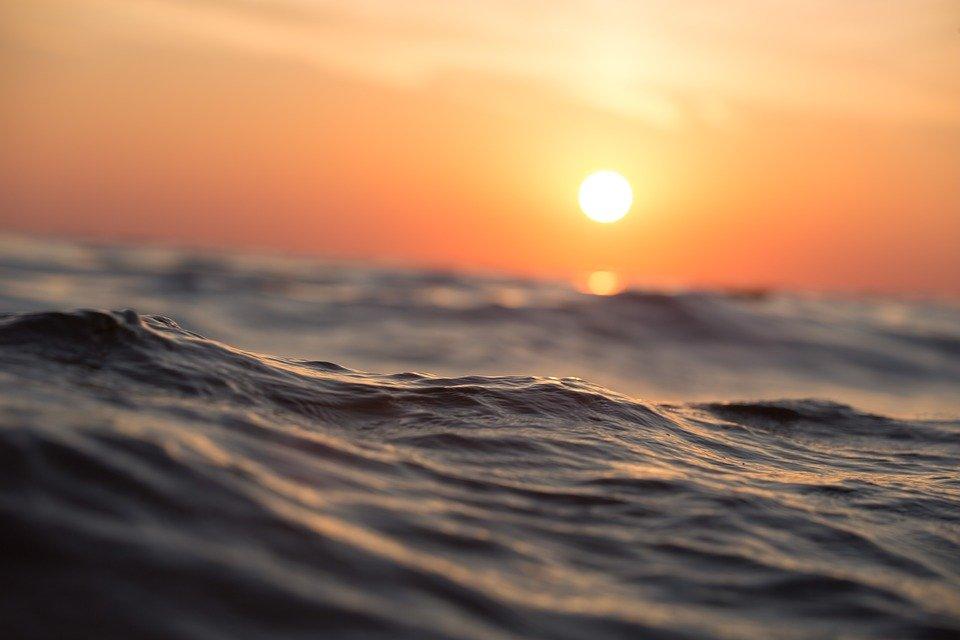
Ocean, Mare, Onde, Alba, Crepuscolo, Paesaggio Marino

Foto di Pixabay 


Seas and oceans are two fundamental factors for our life on earth: they cover about ¾ of earth’s surface, absorbing about 30% of carbon dioxide and producing 50% of oxygen. This makes them a primary source of life here on our planet.

However nowadays oceans are in great danger: due to pollution and climate change, the temperature has risen to a new record level, glaciers are melting, and water level is rising (+15 cm during this century). These consequences are likely to last for many years. Even if we try to take an action now, to make up for our mistakes, our oceans will need time to recover.

Specifically, there's a part of oceans, that is called “underwater grasslands,  i.e. huge expansions of marine flora located on the seabed. They are mainly responsible for absorbing CO2 (about twice as much CO2 absorbed by forests of the same size). They are also responsible for the acidification of water, they create a natural habitat for fishes and it is believed they also help to limit the damage caused by microplastic. Despite their crucial role in this play, pollution and invasive bait are creating some serious damage: an area of these grasslands as large as a football pitch is disappearing every half an hour according to UNEP, the united nations environmental program.

Preserving marine waters and life below water is a challenge that the UN itself set as one of the goals of the 2030 agenda: goal 14, “conserve and sustainably use the oceans, seas and marine resources for sustainable development”. 

Nowadays, about 10% of the oceans are protected: the UN's purpose is to protect the biodiversity of 30% of the oceans by 2030 through the so-called 30x30 initiative, launched by Great Britain and joined by Italy in June 2020. What is its aim? To protect the health of seas, biodiversity, and fight climate change.

Sources

https://www.onuitalia.it/sdg/14-la-vita-sottacqua/#:~:text=Essi%20fungono%20da%20sistema%20respiratorio,assorbendo%20anidride%20carbonica%20e%20scorie.&text=Gli%20oceani%20regolano%20il%20clima,benessere%20economico%20nazionale%20e%20globale.

https://www.rinnovabili.it/agrifood/food-waste-index-report-2021-pianificare-strategie-antispreco/

https://www.lifegate.it/praterie-sottomarine-greenpeace

https://www.rinnovabili.it/ambiente/acqua/tutela-degli-oceani-biodiversita-cop15/


Condividi:

DESIGN AND PACKAGING


Packaging, the packaging or packaging of a product, is a key element in a marketing strategy, particularly when it comes to food packaging. The external aspect of a product is a bit the business card of the manufacturer, as well as a factor on which the customer is based when he chooses to buy it; that’s why packaging design plays a fundamental role, both for brand identity and, because of the attractiveness of the product itself.

In the world of marketing, there is real psychology behind these concepts, fundamental aspects to truly understand what is the packaging: just as it happens for advertising, the external and also the aesthetic aspect of a product contributes to attracting the attention of potential customers. Several industry studies explain how the idea of buying and the need for a product and the desire to own it is born in the minds of consumers long before they enter a store.

Our brain unwittingly receives messages from advertisements as well as from the packaging itself, information that stores even if initially, that product seems not to interest us. These messages activate all five senses and it is precisely through the perceptions received that we are then induced to buy one product rather than another.

Botta packaging, for this reason, offers a service specifically dedicated to the design and graphics of the packaging, according to specific needs.

2 types of packages: regular package; premium package.

On our official website you can, in the services section, have all the specific information.


Source: Packaging design from Botta Packaging

Condividi:

CO2 REDUCTION


CO2 Reduction

According to NASA, "Carbon dioxide (CO2) is an important heat-trapping (greenhouse) gas, which is released through human activities such as deforestation and burning fossil fuels, as well as natural processes such as respiration and volcanic eruptions". 


Source: https://unsplash.com/photos/3ioqs19Wa2A


National Geographic states that the release of the gases is at an all-time high. It can be noted that most of the sectors of the global economy, from manufacturing to the final consumer, contributes to the emission of this greenhouse gas. This is causing more harm than good as it is causing changes to the climate. Temperatures will continue to rise, as will the impact of acid rain, which continues to be high, causing damage to plant life. They both have immediate and long-term consequences for the ecosystem. As a result of its ability to displace oxygen from the atmosphere, it can cause difficulty breathing, excessive sweating, increased heart rate, and convulsions in humans, among other things. What can be done to alleviate the severity of the situation is the question.

Since the underlying causes for the emission of this gas are by human activities, humans can help reduce the impact of CO2. Reducing our home energy carbon emission can include making an effort to use fewer appliances, using recyclable products and packaging, using other alternative options like driving fewer carbon emission cars, or a combination of these ideas.

Businesses can help increase environmental awareness among their employees and stakeholders by making environmentally conscious purchasing decisions, implementing sustainable business practices, and promoting greener work methods.


Source:  Life cycle assessment from Botta Packaging

An additional way in which the government can also help is by investing and backing companies whose primary mission is to cut carbon dioxide and other harmful gases from the atmosphere. The Environmental Protection Agencies should keep educating the general public on the hazards posed by the gases and also continue to push for environmental programs that help reduce the pollution on the planet.


Sources

External links

https://climate.nasa.gov/vital-signs/carbon-dioxide/

https://sciencing.com/effect-human-activities-environment-11374.html

https://www.nationalgeographic.com/environment/article/greenhouse-gases


Condividi:

CORRUGATED BOARD


Corrugated board is a material mainly used in the packaging industry.

In its simplest form it consists of two flat paper surfaces, called "covers", which enclose a corrugated paper, all tied together with the use of natural adhesives. It is this combined action of flat covers with the internal wave that gives rigidity and resistance to the whole and determines its effectiveness in the packaging and transport of goods.

Corrugated board protects and preserves products. Each product requires its own packaging. The right balance must be sought between the material used and the protection of the product.

Consideration shall be given to the unit of packaging, the weight of the contents, the manner in which the product is placed inside, whether it has a primary packaging and the consistency thereof.

To decide the types of paper to be used, you need to know how the product is introduced into the carton (manually or mechanically), if the product is carrying, and know its weight. And again, evaluate how it is stacked in the warehouse, at what height, how long it lasts in the warehouse, how it is shipped and at what distance, if you expect environmental hydrometric variations.


In its simplest structure, it consists of two paper surfaces (covers) enclosing a corrugated paper (wave).

The waves can be from one to three, depending on the use. These latter types are used to contain very heavy bulk products.

The various elements are coupled together by means of a glue of vegetable origin. Cover papers and wave papers are distinguished. The cards can be different depending on the required performance.

At box packaging you can find different types of corrugated cardboard packaging, and you can adapt them to the needs of our customer.


Condividi:

PAPER AND CARDBOARD AGAINST FOOD WASTE

 Paper and cardboard against food waste

11% less food waste on a national scale, this is the figure that returns the report Waste Watchers 2021 on the occasion of the eighth day against food waste, demonstrating how during the pandemic Italians have developed effective strategies againstwaste based on more prudent expenses and more conscious choices, such as those of favouring efficient and sustainable packaging.

Paper is a natural, biodegradable and recyclable material that is also suitable for use in the food packaging sector. Paper and cardboard are, moreover, a constant subject of research and innovation, with a view to combining more and more performance, safety and sustainability: as illustrated by a study recently carried out by Comieco and the Scuola Superiore Sant'Anna in Pisa, innovative materials such as nanocellulose already offer today guarantees of perfect conservation, high degree of recyclability and great application possibilities, opening new scenarios for the development of food packaging in an increasingly sustainable and circular perspective.

"According to the research we conducted with Sant'Anna, 81% of Italian consumers are willing to pay more for a product if it is packaged in sustainable packaging, compared to a European average of 77% and, always the same research, identifies how the use of recycled materials and its final recyclability is the main feature of a sustainable packaging" says Carlo Montalbetti, General Manager of Comieco. "Comieco, together with the packaging supply chain, has long been committed to promoting solutions that meet the new needs of consumers that also affect the strategic decisions of companies".

An increasingly topical issue considering the development of food delivery that this year has accelerated processes already evolving, in relation to the design and innovation of cellulose-based packaging.


From doggy bags, to pizza cartons and food bags, paper and cardboard stand firmly at the forefront of consumer preferences. When asked about the types of packaging, 72% of European consumers say they absolutely prefer paper and cardboard for their sustainability and ease of recycling (Two Sides: packaging in the eyes of the European consumer, 2020).

Reference
https://www.comieco.org/carta-e-cartone-i-primi-alleati-nella-lotta-contro-lo-spreco-alimentare/ 
Condividi:

RECYCLABILITY


Recyclability is the first requirement for sustainable packaging.


A packaging is recyclable when it can be processed effectively and efficiently to allow the reuse of its cellulosic fibres through the most widely used paper production technologies.

The recyclability of a predominantly cellulosic packaging is not a foregone conclusion, for example, it must be tested, even in single-material solutions, that the glues and inks used are not an obstacle to the recycling process. In the same way, and all the more so, recyclability must be tested in the case of packaging which combines with other materials.

The growing interest of the consumer for the issues of sustainability of packaging pushes companies to a deepening on the recyclability of materials that therefore must be measured analytically through laboratory tests. Assessing the composition of packaging and its components and constituents is fundamental to designing and creating a packaging that is truly eco-sustainable and circular.


The paper industry has identified methods of analysis for the determination of recyclability, the result of which allows producers and users of predominantly cellulosic materials or products to communicate to their customers the level of recyclability of materials or products, enhancing the characteristics of eco-sustainability.

The Aticelca 501/19 system is a voluntary evaluation method, carried out by Aticelca with the contribution of Assocarta, Assografici and Comieco and the technical support of Innovhub and Lucense, able to determine the level of recyclability of predominantly cellulosic materials and products (paper and cardboard), based on a laboratory analysis developed since 2011 and became standard UNI 11743:2019 in April 2019.

Reference

https://www.comieco.org/innovazione/  


Condividi:

CAMPAIGN "ZERO WASTE"


Campaign "Zero Waste"


CONAI supports the initiatives of the public campaign to prevent food waste "Waste zero", organized by the Waste Watcher Institute - International observatory on food and sustainability, for a common reflection on the quantities of food not consumed, which is thrown into the trash every day and raising awareness of good practices that can be adopted.

Sustainability and eco-design are increasingly the focus of research and debate for the new characteristics required for packaging: from the reduction of raw materials used to the opportunity to use recycled material, up to a design that ensures recyclability or composability.


The European legislation of the last two years encourages the sustainable development of packaging and companies, in turn, are moving towards increasingly innovative and efficient solutions, compatible with the key role of packaging. The pack must protect, keep the product during transport and encourage its optimal storage, but as soon as it is placed on the shelf it undoubtedly affects the choice of purchase and the perception of the brand by the consumer.


But what affects the decision to buy a product, at first glance? The impact on the quality and safety of the product, from the origin of the raw materials to its origin is decisive for 9 out of 10 Italians (89%), and so the guarantees provided between certification and traceability (88%).

Packaging and its environmental characteristics are also factors affecting consumer purchasing choices (73% of respondents). The reason is probably to be found in the dynamics of the relationship between product and 'sustainability in the perception of consumers. The product is sustainable, first of all, if its packaging is recyclable (for 71% of respondents) or if it is made of recycled material (69%). What if a pack is not recyclable? 1 Italian out of 4 (25%) buys it the same; 47% buys it but not willingly; 22% changes its mind and focuses on a product with the recycled or recyclable packaging, 5% - 1 Italian out of 20 - in addition to not buying it also advises against the use in the circle of friends and family.


https://www.conai.org/notizie/campagna-spreco-zero/ 
Condividi:

Categorie

Popolari

Logo

Pages

Follow us on Instagram

botta_box

Follow us on Facebook